
Grenache vs Pinot Noir: The Connection Between Two Elegant Reds

When wine enthusiasts think of elegant, fruit-forward red wines, Pinot Noir typically dominates the conversation. But there's another variety that shares many of Pinot's most beloved characteristics while offering a distinctly different personality: Grenache. Both grapes produce wines with softer tannins, vibrant red fruit flavors, and surprising transparency, yet they approach winemaking from opposite ends of the climate spectrum.

Understanding the similarities and differences between these two varieties can help you discover new favorites and expand your palate beyond the usual suspects. If you've ever enjoyed a silky Pinot Noir and wondered what else might appeal to that same sensibility—but perhaps with a bit more body and warmth—Grenache deserves your immediate attention.
For wine lovers exploring California's Central Coast, wineries like Shale Oak here in Paso Robles showcase how Grenache thrives in warm climates, producing wines that deliver consistent quality and bold fruit expression year after year.

The Thin-Skinned Siblings
Both Grenache and Pinot Noir share a defining physical characteristic: thin skins. This might seem like a minor botanical detail, but it fundamentally shapes everything about these wines. Thin skins mean less color extraction, lower tannin levels, and wines that show a more translucent, lighter hue in the glass compared to thick-skinned varieties like Cabernet Sauvignon or Petit Verdot.
Pour a Grenache and a Pinot Noir side by side, and you'll notice both display that characteristic semi-translucent quality. Pinot Noir typically shows a pale to medium ruby color, sometimes with garnet or brick-red tones. Grenache presents a slightly deeper ruby to purple hue, though it still maintains that lighter, brighter appearance that sets it apart from heavier reds.
This thin-skinned nature also means both varieties are capable of remarkable transparency—both literally and figuratively. Wine experts often describe Grenache as having Pinot Noir's ability to transmit a sense of place, expressing the specific characteristics of the vineyard where it's grown. Yet despite these similarities, their ideal growing conditions couldn't be more different.

Climate Preferences: Cool vs Warm
Pinot Noir is famously finicky, earning its reputation as the "heartbreak grape" among winemakers. It demands cool climates with long, gentle growing seasons—places like Burgundy, Oregon's Willamette Valley, California's Sonoma Coast, or New Zealand's Central Otago. The grape's delicate nature makes it sensitive to heat, and it requires careful attention to achieve the elegance and complexity it's known for.
Grenache takes the opposite approach. This variety loves heat and sunshine, thriving in the warm, dry conditions of Spain's Priorat, France's Southern Rhône, Australia's Barossa Valley, and California's Paso Robles. Where Pinot Noir would struggle in extreme heat, Grenache flourishes, developing the high sugar levels that lead to wines with substantial alcohol content, often ranging from 13.5% to 16% ABV.
This climatic difference explains why Grenache has become such a reliable choice for winemakers. As one wine importer famously noted, "Grenache delivers what Pinot promises." While Pinot Noir can disappoint in less-than-ideal vintages or when grown outside its comfort zone, Grenache consistently delivers bold, fruit-forward wines year after year. It's the dependable friend who always shows up, versus the brilliant but temperamental artist.
Flavor Profiles: Red Fruit in Different Expressions
Both wines showcase red fruit flavors, but they express them in distinctly different ways. Pinot Noir offers delicate aromas of red cherry, raspberry, and wild strawberry, often woven with floral notes of rose petal and earthy undertones of mushroom, forest floor, and damp earth. The wine's texture is silky and refined, with gentle tannins and a finish that lingers with grace rather than power.
Grenache brings a bolder, juicier approach to red fruit. Think ripe strawberry, raspberry jam, black cherry, and plum, often accompanied by distinctive spice notes of cinnamon, white pepper, and anise. Many tasters describe Grenache as tasting like a "fruit roll-up"—that candied fruit intensity that makes the wine immediately approachable and generous on the palate.
Where Pinot Noir might remind you of walking through a cool forest picking wild berries, Grenache evokes sun-warmed fruit plucked directly from the vine, bursting with ripeness and warmth.
As Grenache ages, the wines develop more complex characteristics including leather, tar, tobacco, and dried herbs—particularly in Old World expressions from regions like Châteauneuf-du-Pape. Pinot Noir's evolution tends toward dried flowers, forest floor, truffle, and subtle spice, maintaining its characteristic elegance even with decades of bottle age.
Structure and Mouthfeel: Light vs Medium-Full
The structural differences between these wines significantly impact how they feel in your mouth. Pinot Noir typically presents as light to medium-bodied with high acidity, low tannins, and a bright, lifted quality. This structure makes it incredibly food-friendly and refreshing, even as a red wine.
Grenache offers more weight and substance. Despite its thin skins, the grape's high sugar content and warm-climate ripening create wines that feel medium to full-bodied. The tannins remain moderate and soft rather than aggressive, contributing to a round, plush mouthfeel. The acidity tends to be lower than Pinot Noir, which makes Grenache feel even softer and more velvety on the palate.
Interestingly, both wines generally benefit from minimal oak influence to preserve their fruit character. When you find well-crafted examples made in concrete or neutral oak, the pure expression of the grape really shines through.

Versatility and Value
Here's where Grenache really distinguishes itself: versatility and consistency. While Pinot Noir requires ideal conditions to reach its potential, Grenache adapts to various climates and soil types with relative ease. It's planted successfully across Spain, France, Italy, Australia, and California, producing quality wines in each region while maintaining its distinctive character.
This adaptability translates directly to value. While premium Pinot Noir from Burgundy or Oregon can easily command $50-$200+ per bottle, excellent Grenache wines are often available in the $15-$40 range. You can find world-class Grenache-based wines like Châteauneuf-du-Pape in the $40-$80 range—price points where Pinot Noir might still be considered "entry-level" from prestigious regions.
Grenache also shows remarkable versatility in winemaking. Beyond dry red wines, the grape produces stunning rosés (particularly from Tavel in the Rhône), and fortified dessert wines called vin doux naturels. It's equally comfortable as a single-varietal wine or as the backbone of blends like the famous GSM (Grenache-Syrah-Mourvèdre) combinations that have become iconic in both France and Australia.
Food Pairing: From Delicate to Bold
The different structures of these wines naturally lead to different food pairing strengths. Pinot Noir's lighter body, bright acidity, and gentle tannins make it phenomenal with poultry, salmon, mushroom-based dishes, pork tenderloin, and softer cheeses. The wine's elegance complements rather than overwhelms delicate preparations.
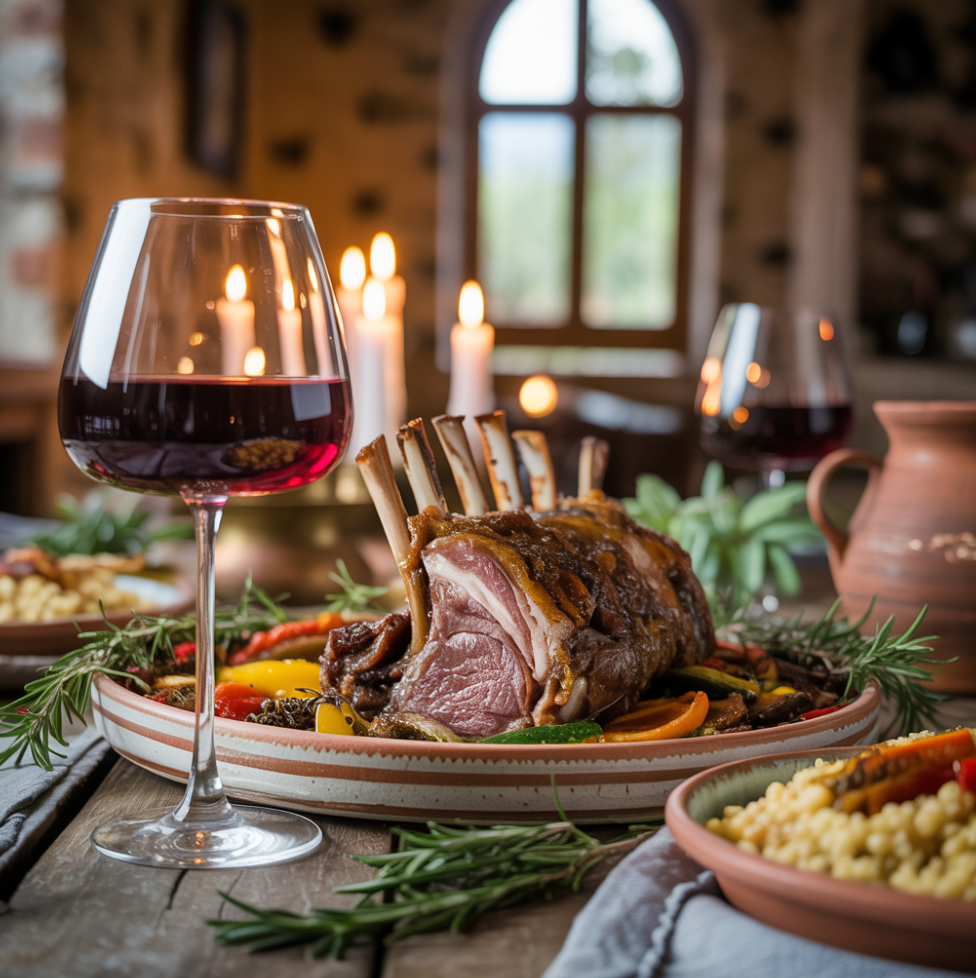
Grenache handles heartier fare with ease. Its fuller body, warmth, and spice notes pair beautifully with grilled meats, slow-cooked lamb, barbecue, spicy stews, and Mediterranean cuisine. The wine's natural affinity for bold seasoning makes it ideal for dishes featuring cumin, cinnamon, or other warming spices—think Moroccan tagines, Spanish paella, or robust French cassoulet.
Interestingly, both wines work well with mushrooms, though for different reasons. Pinot Noir's earthy notes create a natural bridge to mushroom flavors, while Grenache's texture and body can stand up to rich mushroom preparations like stroganoff or hearty mushroom risotto.
The Blending Tradition
Both grapes have rich histories as blending components, though they serve different purposes. Burgundians were reportedly guilty of blending Grenache from the neighboring Rhône region into their Pinot Noir during the 17th century to add body and alcohol—a practice that was perfectly legal at the time.
Today, Grenache is the undisputed king of Southern Rhône blends, making up 70-80% of iconic wines like Châteauneuf-du-Pape, where it's typically blended with Syrah, Mourvèdre, and other varieties. In these blends, Grenache provides the fruit and body, while other varieties contribute tannin structure, color, and complexity.
Pinot Noir, meanwhile, is most often enjoyed as a single-varietal wine, particularly in its Burgundian homeland where the focus is on expressing individual vineyard sites. When it is blended, it's typically with small amounts of other grapes to add specific characteristics rather than forming the base of a multi-variety blend.
Which Should You Choose?
If you love Pinot Noir's elegance, silky texture, and nuanced complexity, and you appreciate wines that reveal subtle layers with each sip, stick with Pinot Noir from quality producers in classic regions.
But if you sometimes find Pinot Noir too delicate or inconsistent, or if you prefer wines with more immediate fruit impact, generous body, and reliable quality across vintages, Grenache will likely win your heart. It offers many of Pinot's most appealing characteristics—soft tannins, red fruit, food-friendliness—while delivering more consistency and often better value.

The beauty is that you don't have to choose just one. Both varieties deserve a place in any serious wine lover's rotation, each excelling in different situations and with different foods. A crisp autumn evening with roasted chicken might call for an elegant Pinot Noir, while a summer barbecue with spice-rubbed ribs practically demands a bold Grenache.
For those exploring California's wine country, Paso Robles has emerged as an ideal region for Grenache, where the warm days and cool nights allow the grape to develop full ripeness while maintaining freshness. The region's diverse soils and microclimates produce Grenache wines that can compete with any in the world, offering that perfect combination of power and elegance that makes this variety so compelling.
Whether you're drawn to Pinot Noir's delicate complexity or Grenache's bold generosity, both wines invite you to explore the remarkable diversity that thin-skinned grapes can achieve.


Comments