
What Makes the Willow Creek District One of Paso Robles' Most Exciting Wine Regions

I'm biased, obviously. Shale Oak has been in the Willow Creek District since the beginning, and I've spent years farming and making wine from fruit grown in this specific corner of Paso Robles. But that proximity is also what gives me something worth saying about it, because I've watched this district earn its reputation up close, one vintage at a time.

Most people who visit Paso Robles know the broad strokes: westside vs. eastside, the diurnal temperature swings, the calcareous soils. What fewer people understand is how the region's 11 official sub-AVAs, each with their own distinct terroir, actually shape the wines that come out of them. The Willow Creek District is one of those sub-AVAs, and it's the one I think deserves the most attention from wine lovers who are ready to go deeper than the big-picture stuff.
Where Willow Creek Sits
The Willow Creek District sits on the westside of Paso Robles, west of Highway 101, sandwiched between the Adelaida District to the north and the Templeton Gap District to the south. If you're driving out from downtown Paso Robles on Highway 46 West, you'll pass right through it.
The district runs along both sides of Highway 46 West and extends onto Vineyard Drive, which is one of the most scenic winery routes in the region. We wrote about how the eastside and westside differ broadly in our eastside vs. westside breakdown, but Willow Creek has its own distinct character even within that westside story.
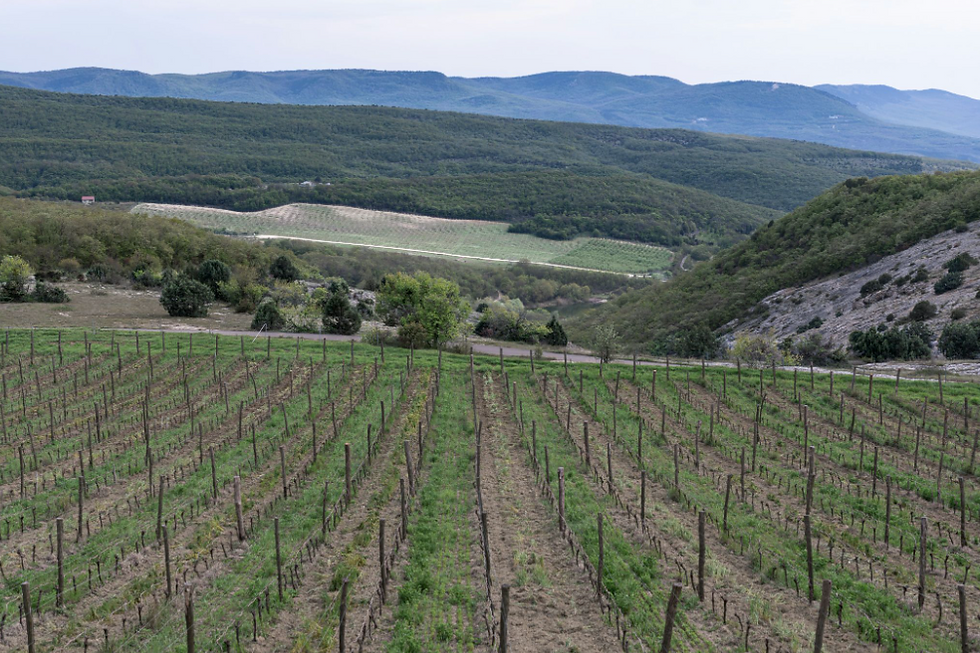
Geographically, Willow Creek sits at the foot of the Santa Lucia mountain range. That matters because the mountains act as a funnel for the cool marine air that pushes in from the Pacific through the Templeton Gap to the south.
You feel it every afternoon when temperatures that have been climbing toward 90 degrees drop 20 or 30 degrees within a couple of hours. It's one of the more dramatic daily weather experiences in California wine country, and it's one of the defining characteristics of why wine from this district has the kind of balance it does.
The Soil That Makes the Difference
The soils of the Willow Creek District are predominantly calcareous, calcium-rich and alkaline, left behind when this entire region was an ancient seabed. That geological history is written into every vineyard in the district.
Calcareous soils are prized in wine regions around the world because they do a specific set of things really well: they drain quickly so vines don't sit in standing water, they have low fertility so yields stay naturally in check, and they create conditions that push vines to send roots deep in search of water and nutrients. That root depth is part of what gives wines from this area their sense of place.

The clay component in these soils also matters. Clay holds moisture from winter rains well into the growing season, which is why many Willow Creek vineyards, including ours, can be dry-farmed. No irrigation. The vine survives on what it stored from the rain.
Dry farming is a sustainable practice and one we take seriously at Shale Oak as part of our SIP Certification and LEED Gold commitment. But it also makes better wine. Vines that are slightly stressed produce smaller berries with more concentrated flavor and better skin-to-juice ratios.
What Grows Best Here
The Willow Creek District has become particularly well-regarded for Rhone varieties. Syrah thrives here in a way that I find endlessly interesting to work with. The cool afternoons preserve the grape's natural aromatics, that violet and black pepper character that makes Paso Syrah so distinctive, while the warm days build the concentration and structure that make it age-worthy.
Grenache also loves this district, showing more depth and spice than it tends to in warmer regions. Mourvedre, which is one of my favorites to work with, finds a natural home in the calcareous soils and produces wines with a savory, earthy complexity that I think represents the best of what this terroir can do.

Cabernet Sauvignon is also planted widely in the district and produces wines with more structure and minerality than eastside Cabernet. The tannins are firmer, the acidity is brighter, and the wines tend to have more aging potential. That's not a knock on eastside Cabernet, it's a different style for different preferences.
The barrel program matters a lot when you're working with Willow Creek fruit. These grapes arrive in the winery with natural structure and acidity, which means barrel selection has to support rather than overpower what's already there. We've written about our approach to oak barrel aging and how French oak in particular lets the calcareous soil character come through rather than bury it under wood flavor. With Willow Creek fruit, that distinction is especially important.
The Wineries Along the Route
The Willow Creek District is one of the more accessible westside wine routes for visitors. Highway 46 West runs right through it, and Vineyard Drive gives you a more scenic, winding alternative that takes you past some of the district's most interesting producers. The concentration of wineries in a relatively compact area makes it easy to plan a day around two or three stops without doing a lot of driving between them.
The district benefits from its proximity to downtown Paso Robles too. You're 10 to 15 minutes from town depending on where you're headed, which means you can do a morning in the district, grab lunch downtown, and loop back for an afternoon stop without losing much time. That's a luxury you don't always have on some of the more remote westside routes.
Visiting Shale Oak in the Willow Creek District
Shale Oak Winery is located at 3235 Oakdale Road in the heart of the Willow Creek District. We farm Syrah, Grenache, and Zinfandel on the property, and source from additional SIP-certified and dry-farmed vineyards nearby. Dogs are always welcome on our dog-friendly patio, which has direct views of the estate vineyard and the hills behind it. It's the kind of spot where you understand the district just by sitting in it for an afternoon.

We're open Thursday through Sunday, walk-ins are welcome, and reservations are appreciated on busy weekends. If you're building a Willow Creek District day, we're a natural anchor for your itinerary, either as a first stop to set the context for the afternoon or as a final stop to compare what you've been tasting against our estate-grown wines.
Paso Robles wine country is big enough that it's easy to spend multiple trips here without ever getting to know any one district deeply. The Willow Creek District is worth that deeper look. Come out and taste what this particular piece of ground can do.


gg88.com khi sử dụng trên điện thoại cần giữ được khả năng đọc và điều hướng dù diện tích hiển thị nhỏ hơn máy tính. Tôi quan sát menu, tiêu đề, khoảng cách giữa các lựa chọn và cách nội dung được chia thành từng phần. Nếu bố cục phù hợp, người dùng sẽ dễ tìm danh mục mà không phải phóng to hoặc cuộn qua quá nhiều thành phần không liên quan. Ngược lại, chữ nhỏ và nút bấm đặt quá sát nhau có thể khiến thao tác kém thuận tiện. Tôi cũng xem cách gọi các mục có nhất quán khi chuyển sang trang chi tiết hay không. Theo tôi, giao diện di động tốt cần giữ được trật…
https://www.222bd.club/ সম্পর্কে আমার কৌতূহল তৈরি হয়েছে একই বিভাগের মধ্যে বিভিন্ন গেমের অবস্থান ও উপস্থাপনা পর্যবেক্ষণ করতে গিয়ে। লাইভ বিভাগে Evolution-এর Crazy Time দেখার পর Mega Wheel-এর দিকে মনোযোগ দিই। দুটি গেমের দৃশ্যমান বিষয়বস্তু আলাদা হওয়ায় তাদের পরিচয় সহজে মনে থাকে। কখনো প্রথমে পুরো বিভাগের কার্ডগুলো দেখি, আবার অন্য সময় পরিচিত একটি গেম খুঁজে নিই। এই পরিবর্তনের সময় প্রধান মেনুতে ফিরে যাওয়ার প্রয়োজন সবসময় অনুভব করি না। আমার কাছে একই বিভাগের মধ্যে বিকল্প নির্বাচন করার অভ্যাসটি গুরুত্বপূর্ণ হয়ে উঠেছে। এতে প্রতিটি গেমের পাশাপাশি তাদের পারস্পরিক অবস্থান সম্পর্কেও ধারণা তৈরি হয়।
TR88.COM khiến mình chú ý đến cách một khu vực chính được đặt trong tổng thể khi mình thu hẹp phạm vi quan sát. Bắn cá là phần mình dùng để hình dung cách một nhánh nội dung lớn được tổ chức trên nền tảng. Mình cũng chú ý khu đăng nhập để xác định nơi dành cho nhu cầu tài khoản khi cần thiết. Hai phần có mục đích khác nhau nên vị trí của chúng khá dễ ghi nhớ sau một số lần sử dụng. Khi đã quen với những mốc thường gặp, mình có thể xác định đúng nơi nhanh hơn và không phải dành nhiều thời gian tìm kiếm như lúc ban đầu.
Changes to travel plans can be stressful when a booking is already confirmed, so having all the relevant information available before contacting customer service is a good idea. A reservation number, passenger name, travel date, payment confirmation, and details of the requested change can help avoid unnecessary back-and-forth. People researching FlyUS customer support may find it useful to review FlyUs phone number and see what types of service-related situations other customers have discussed. Keeping written records of communications is especially useful when a request involves a cancellation, refund, or time-sensitive travel arrangement.
Some wooden fences can be broken through Snow Rider, but relying on collisions is rarely a good strategy when you are trying to achieve a high score.